A simple question with a complex answer, or a complex question with a simple answer?
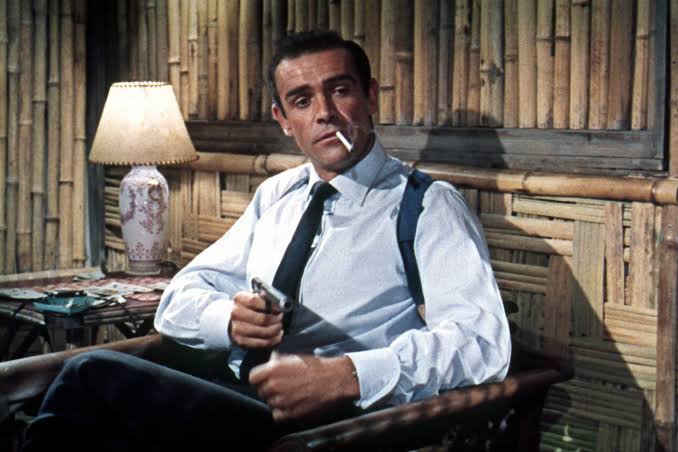
On October 5th, 1962, the world was introduced to Sean Connery’s James Bond. It was the dawn of a new age, the birth of a franchise that would quickly go on to earn its place amongst the greatest in the history of film. It’s an undying, monolithic force to be reckoned with, and–
No, that’s not quite right, not quite right at all. Cambridge Dictionary defines Monolithic as “too large, too regular, or without interesting differences, and unwilling or unable to be changed”. The majority of this description can not be further from the truth. In fact, let me repeat it just once more, for extra emphasis.
“too large, too regular, or without interesting differences, and unwilling or unable to be changed”
Bond is, even in this long period of change and uncertainty, a worldwide phenomenon. Does that mean it is “too large”? Can a franchise or a character be too large? While I entirely think that calling it large is the only part of that definition that accurately describes the presence of the franchise, I think the only part of it that is too large is the prices on the official merchandise store. It is what it is (massive) because of what it is (successful), and I think describing its size as excessive would mean ignoring the work that went into getting it to such a point.
To call the Bond franchise “too regular or without interesting differences” would be to define regular as innovative, or to have little understanding of the characteristics of the franchise at all. Hell, the films do not even behave in a regular manner in regards to themselves, as if there was no blueprint or history at all. Look at the ending of Octopussy, where we see Moore’s Bond donning a clown disguise, or Moonraker, where we see him firing laser blasters inside of Drax’s space station. Then, compare those moments to the crescendo of From Russia with Love, where Connery’s Bond faces off against Red Grant in the tense train car showdown. Compare them to Brosnan’s Bond dangling from the top of the Janus Satellite as he battles his previous brother in arms in Goldeneye. Go as far as taking the ending of No Time to Die! What you’ll find is a thin strand of commonalities existing between each of them. Try to identify the norm, the regular. Having trouble doing so? Well, you should be, because the truth is, you can’t.
Not objectively at least. The Bond films have grown so large that it is hard to restrict them to one form and even if you find yourself able to do so, someone will surely make an argument that threatens to unravel your own conclusion. It leads me to my last point, the last descriptor listed in the definition of monolithic.
“Unwilling or unable to be changed”
It is here that I realize I was wrong. The franchise is not a monolith, it’s a chameleon.
It frequently changes on the outside, and not just in minor ways. Many franchises exist on a single color spectrum, shifting with each entry to different shades and intensities. Bond’s nature escapes this restriction, instead proving its ability to shift to a variety of colors across the spectrum when needed.
Connery’s return after Lazenby’s sudden exit.
The grounding of For Your Eyes Only to reel the films back in after Moonraker’s foray into the sci-fi genre.
If you would’ve shown me Die Another Day and then Casino Royale and told me that they came one after the other, I’d probably stop taking you seriously.
There have been dozens of shifts made to the films in the franchise, some brought about in an attempt to fix what the producers saw as previous mistakes, and others brought about by the changing times and the shifting culture. My examples above only highlight a small handful of these instances.
Bond exists as a chameleon because no matter what color, what shade, or what hue the franchise carries on its outer shell, the DNA remains the same. Every Bond film has something that a fan will look at and feel a connection to, a feeling of familiarity, a nostalgia for something that is equal parts old and new. What is that thing? Well, it’s up to each of us as individuals to answer that question.
So, I ask once more…
What does Bond mean to you?
-J.B.
Leave a Reply